
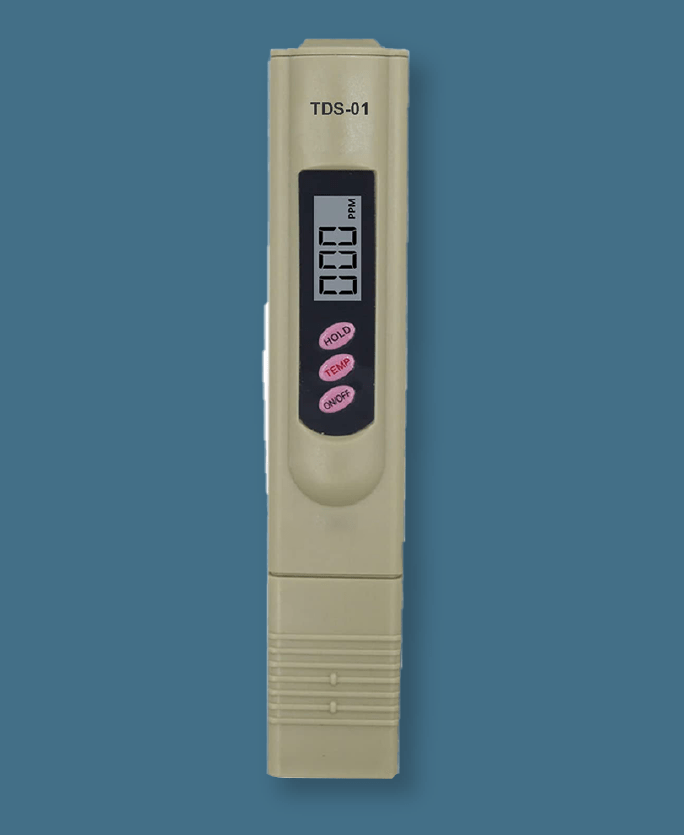
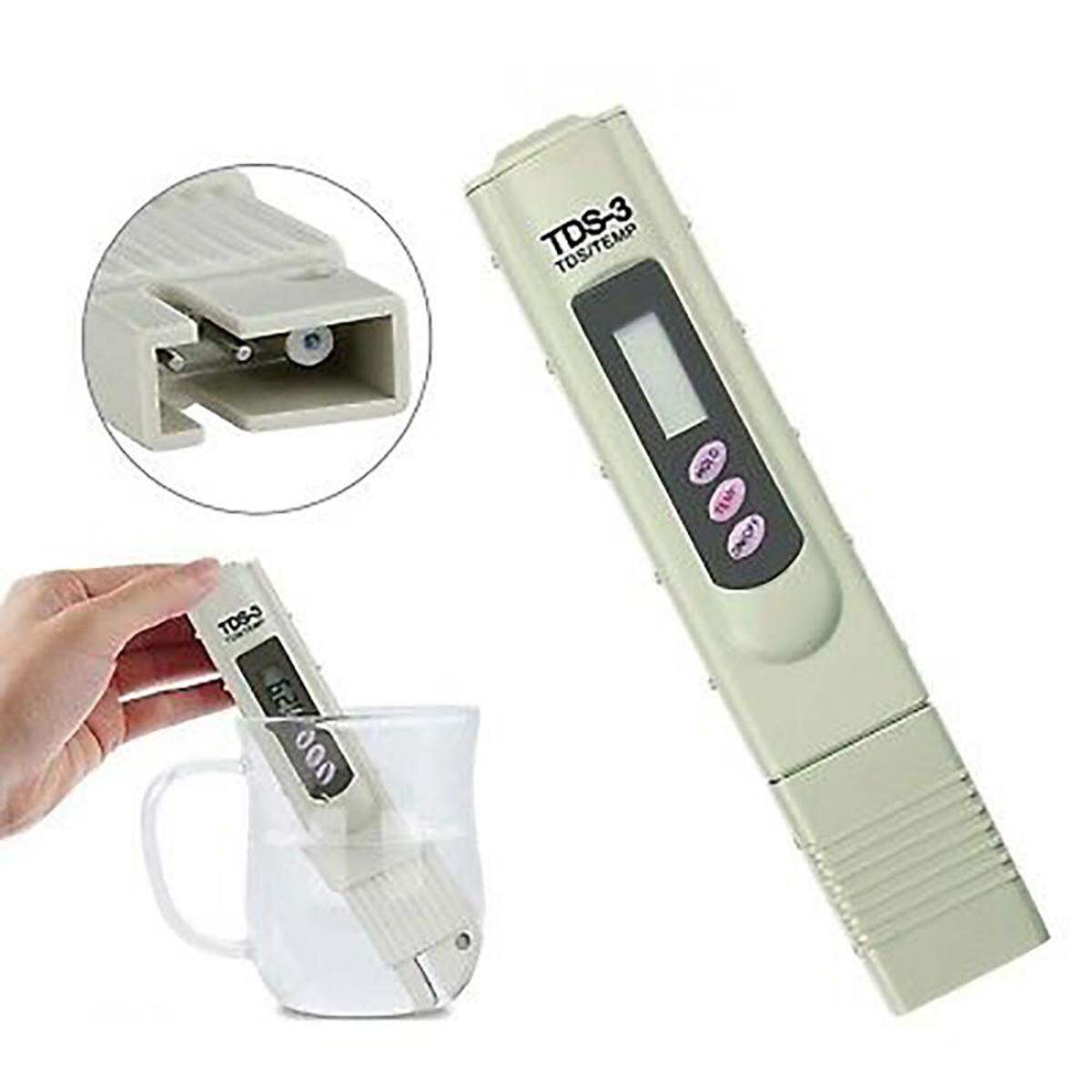
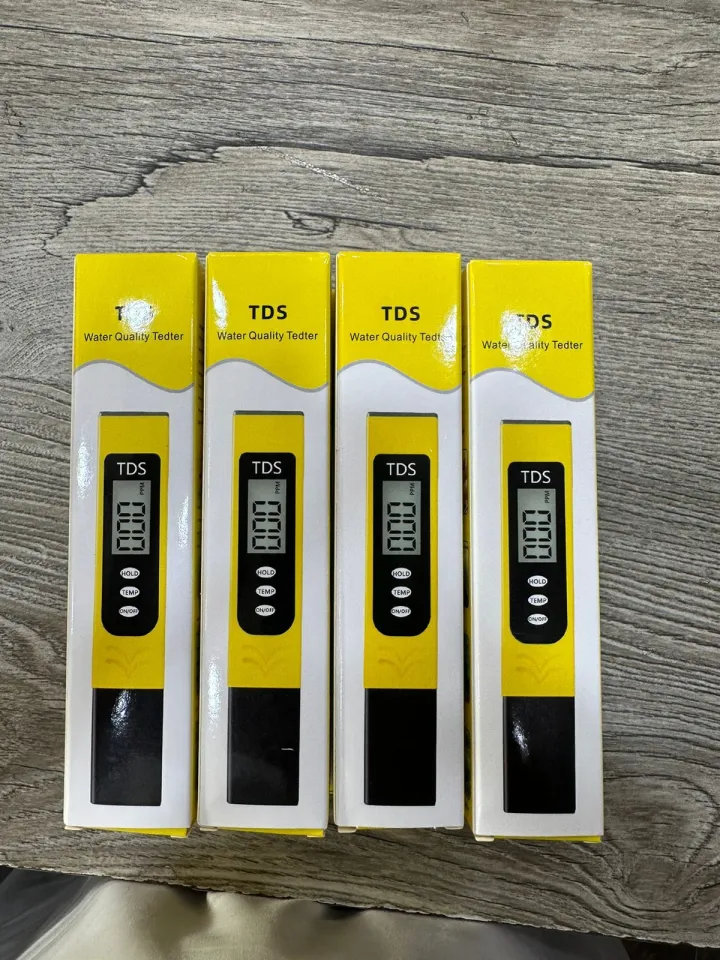
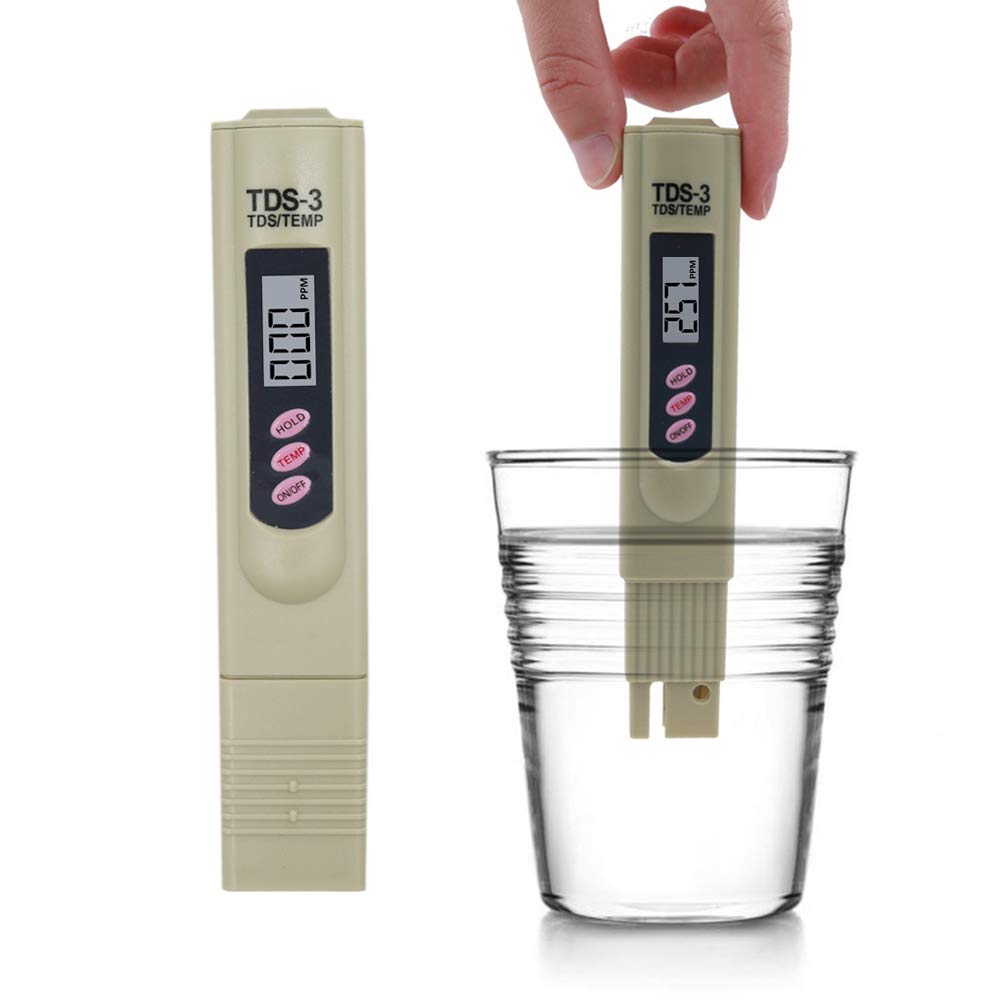
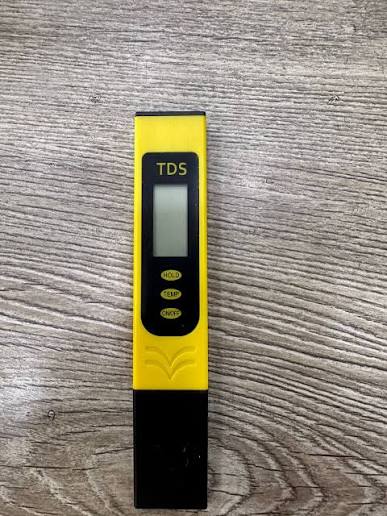
TDS meter is a small, handheld digital tool used to measure Total Dissolved Solids—such as salts, minerals, and metals—in water by checking its electrical conductivity. It displays results in ppm (parts per million) and help check drinking water purity
How to Use a TDS Meter
Remove cap: Take off the protective cover from the bottom of the device.
Turn on: Press the power button to light up the screen.
Dip probe: Place the metal pins into the water sample up to the max immersion line.
Stir gently: Swirl the pen slightly to get rid of any tiny air bubbles.
Read value: Wait ten seconds for the number to settle, then press hold if needed.
Understanding the Numbers(PPM)
0–50 ppm: Very pure water, often from a reverse osmosis system.
50–150 ppm: Low mineral content, ideal for clean drinking water.150–300 ppm: Normal range for regular tap water.
300–500 ppm: High mineral level that may change how the water tastes.
500+ ppm:Too high; water may need a heavy filter or purification.